Designing a Small Courtyard Garden for Year-Round Interest
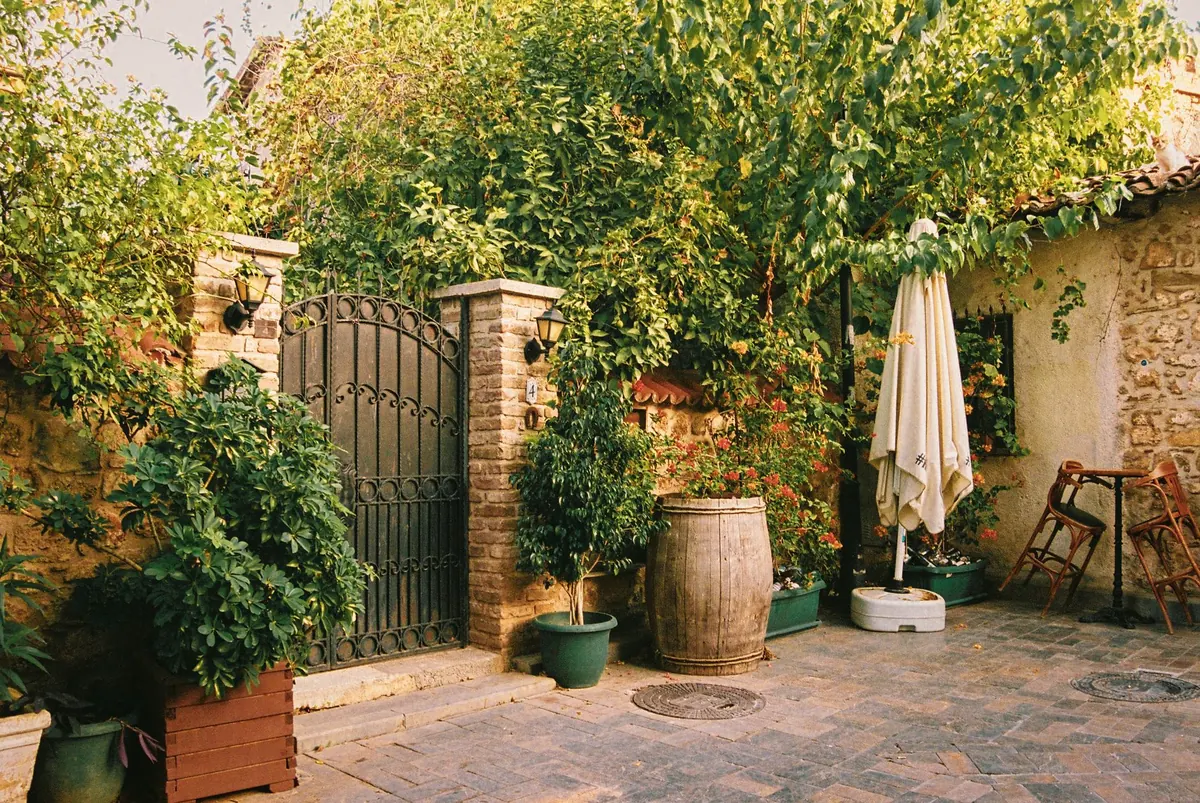
A courtyard garden is a room without a roof. Walls on two, three or four sides give it shelter, privacy and a feeling of enclosure that a wider garden rarely matches — but they also cast shade, hold damp air and make every mistake look twice its size. In a space this compact, nothing can be hidden for long. A shrub that turns dull in July will be the only thing you see from the kitchen window for three months. A path that puddles in December will be the thing you step in every morning. The good news is that the same intensity works in your favour: get the bones right, and a courtyard can be more rewarding than a garden ten times its size, offering scent, colour and structure in every week of the year.
Start With the Light, Not the Plants
Before you buy a single pot, spend a full day watching the light. Note when sun first strikes the paving, where the shadow of the house wall falls at noon, and which corner is still in shade at four o'clock in June. Then repeat the exercise in winter, because a courtyard's light changes dramatically between June and December — a spot that bakes in midsummer may sit in gloom from November to March.
- Morning sun, afternoon shade — ideal for woodland plants, ferns, hostas and hellebores.
- South-facing and enclosed — a heat trap. Choose drought-tolerant plants and expect to water often.
- North-facing — cool and often damp. Lean into foliage, green flowers and reflective surfaces rather than colour.
- Deep shade all year — treat paving, gravel and sculpture as your "plants" and use a small number of tough evergreens.
This one survey will save you more money and disappointment than any other hour you spend on the garden.
Build the Bones Before the Bloom
Year-round interest is not really about flowers. It is about structure: the shapes that remain when everything has finished blooming. In a small space you need only three or four of them, chosen well and repeated.
- One small tree — a multi-stem Acer, Amelanchier or olive gives height, dappled shade and a reason to look up.
- One evergreen shrub — clipped box, yew or Pittosporum holds the composition together through winter.
- One vertical element — a wall shrub such as Trachelospermum jasminoides, which is evergreen and scented, or a simple wooden trellis.
- One strong container — a large pot with a permanent planting, so the courtyard never looks bare in a fallow month.
In a courtyard, you do not decorate a space — you compose it. Every element is visible from every other element, so restraint reads as confidence.
Planting for All Four Seasons
Once the bones are in place, the planting can be layered so that something is always doing something. Think in overlapping waves rather than a single summer crescendo.
Winter
Winter is the season that separates a good courtyard from a pretty one. Use scent above all: Sarcococca confusa, wintersweet (Chimonanthus praecox) and witch hazel will perfume the whole space from a single shrub. Add hellebores for flowers, snowdrops for detail, and coloured stems — Cornus sanguinea 'Midwinter Fire' — for the low winter sun to catch.
Spring
Spring arrives early in a sheltered courtyard. Bulbs planted in pots and at the base of shrubs give weeks of colour before the perennials wake, followed by epimedium, pulmonaria and the fresh, translucent leaves of the small tree.
Summer
Summer is the easy part, so be disciplined. Choose a narrow palette — perhaps whites, blues and greens — and repeat it, rather than collecting one of everything. Salvias, agapanthus, verbena and scented jasmine will carry the space, especially in the evening.
Autumn
Autumn brings leaf colour, berries and seedheads. Japanese anemones, cyclamen and ornamental grasses extend the season, while fallen leaves on gravel or stone give the courtyard a texture it lacks in July.
Work Vertically, Not Outward
Small courtyards have almost no ground to spare but plenty of wall. Use it. A trellis, a slim climber, a wall-mounted planter or a mirror all borrow space rather than consuming it. Aim for three layers — ground cover, mid-height planting and something overhead — and the eye will read depth where there is only a few square metres.
Materials, Water and Air
Paving should be generous and simple. One material, repeated, always looks larger and calmer than three. Avoid busy patterns and tiny cobbles, which shrink a space visually. Gravel is forgiving in awkward corners and sounds pleasant underfoot.
Drainage matters more than most people expect. Courtyards collect water from surrounding roofs and walls, and a damp, airless corner will rot plants and grow algae. Make sure surfaces fall away from the house, keep an accessible drain, and leave gaps between plants so air can move.
Furniture, Lighting and the Evening Garden
Furniture should be proportionate — a small bistro set will always beat a large dining table you never use. Lighting transforms a courtyard after dark: a single uplighter in the tree, a warm low light near a wall, and candlelight on the table are enough. Pale flowers and light-coloured paving will pick up whatever light you provide.
Five Mistakes That Shrink a Courtyard
- Planting too many small pots instead of a few large ones.
- Using several paving materials and colours at once.
- Ignoring winter, so the garden is bare for five months.
- Blocking the single best sightline with a shed, bin store or oversized shrub.
- Choosing plants for flowers alone, forgetting foliage, scent and shape.
A Simple Year-Round Calendar
- Late winter — prune the structure plants, tidy grasses, top-dress pots.
- Spring — feed containers, plant out tender annuals once frost has passed.
- Summer — water deeply but less often, deadhead, and enjoy the evenings outside.
- Autumn — plant bulbs for spring, clear fallen leaves, mulch borders.
- Early winter — protect pots from frost, clean paving, and check drainage before the heavy rain.
Design a courtyard for the worst week of the year, not the best one. If it looks good in late January — with a scented shrub in flower, some evergreen structure and a dry path to the door — it will look extraordinary in June, and it will keep rewarding you every day in between.
Photo: Ayşegül Aytören / Pexels