Clover, Chamomile or Wildflower Turf? Choosing a Low-Mow Lawn
A striped lawn is a lovely thing, but it asks a lot: mowing from March to October, feeding, edging, watering when the weather turns dry. Plenty of gardeners are now handing part of that lawn over to something that needs four or five cuts a year rather than twenty. Clover, chamomile and wildflower turf are the three most talked-about routes, and they are not interchangeable. One shrugs off drought and family life, one is a fragrant carpet for a small sunny corner, and one is a meadow in a roll.
What "low-mow" really means
None of these is a mower-free option. Clover and chamomile look their best with a handful of cuts a year, and wildflower turf needs an annual hay cut or it will quietly turn into coarse grass. What you are buying is a change of rhythm: fewer passes, a rougher finish underfoot, and far more life in the sward.
Two things matter more than which one you pick. The first is ground preparation — the failures with these lawns nearly always start with skimpy prep rather than the wrong seed. The second is fertility. Chamomile and wildflowers want lean, free-draining soil; clover makes its own nitrogen. Feed any of them like a traditional lawn and you will get lush leaves and almost no flowers.
Clover: the easy-going choice
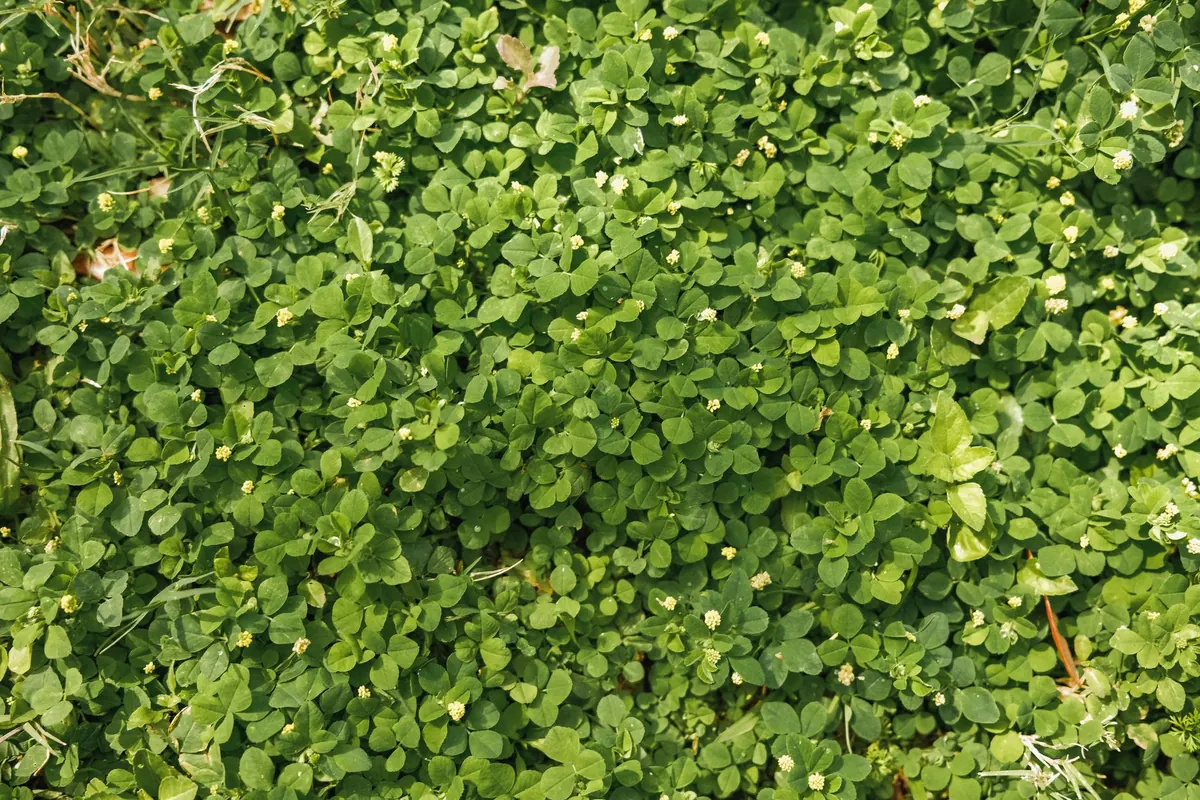
White clover (Trifolium repens) and the smaller-leaved microclover varieties are the practical options. Microclover has finer leaves and fewer flower heads, so it looks tidier through summer. Clover works with bacteria in its root nodules to fix nitrogen, which means it holds its colour without much feeding and stays green when a ryegrass lawn has gone brown. It copes with most soils, though it sulks in waterlogged ground.
Sow it with a fine fescue rather than on its own. A pure clover lawn is slippery underfoot when wet and thins into bare patches wherever feet land repeatedly — by the back door, along the washing line. A mix gives a denser sward, better wear and a surface you can walk on in the rain.
Mow to roughly 50–60mm with a sharp blade and never scalp it; close cutting weakens clover and lets moss and weeds in. If you want the bees, leave patches to flower in June and July, then cut on a high setting once the flowers fade. Oversow thin spots in early autumn while the soil is still warm.
Foot traffic: good, in a mix. Fine for a lawn the family crosses daily; not a football pitch.
Chamomile: small, sunny and precious
For lawns, the chamomile to grow is Chamaemelum nobile 'Treneague'. It doesn't flower, which is exactly why it was traditionally planted on chamomile seats: it knits into a flat, springy, fragrant mat instead of seeding itself into a shaggy mess.
It is raised from plugs set on a grid, around 15–20cm apart, and it is slow. You will be hand-weeding between those plugs for most of the first season while they close up, and watering them through any dry spell. That slow start is why chamomile usually appears in small patches: a seat, a path edge, a few square metres in a sunny front garden.
Conditions matter. Full sun, free-draining soil, low fertility. Chamomile rots off in winter wet and never thrives in shade. Keep it mown lightly on a high setting with a sharp blade, ideally in spring, to lift dead growth and encourage it to thicken.
Foot traffic: light, and dry. It smells wonderful when walked on, but a dog charging across it in February will do lasting damage.
Wildflower turf: a meadow, laid like a carpet
Wildflower turf arrives as a mat of native grasses and flowering plants and is laid in the same way as ordinary turf. It is the quickest route to a meadow look and, per square metre, the most expensive of the three before you have even paid for delivery. The preparation is where the real cost sits.
Strip the existing grass and weeds first, thoroughly. If your soil is rich — the typical legacy of years of lawn feeding — take off the top layer of soil, because wildflowers struggle in fertile ground where coarse grasses and docks take over. Don't skip this. It is the single biggest reason wildflower turf fails.
After that it is a two-cut regime. Tidy it in early spring before growth takes off, then make the main cut in late summer once the flowers have set seed, clearing the clippings so you are not adding fertility back. Don't feed it, and deal with docks, thistles and ragwort by digging or spot treatment rather than reaching for a general weedkiller.
Foot traffic: light. Fine for a path to the shed or a bench among the flowers; not somewhere children will play. A mown route through it solves most of that.
Wildlife value: the best of the three. Native mixes feed bees, butterflies and other pollinators through summer, and the seed heads feed birds into autumn and winter.
At a glance
- Cost: clover seed is the cheapest way to cover a large area. Chamomile plugs sit in the middle, but establishment is slow. Wildflower turf costs the most up front, delivery included.
- Upkeep: clover needs a few cuts and an occasional oversow. Chamomile needs hand-weeding, watering and careful annual mowing. Wildflower turf needs just two cuts a year, but both must be cleared away.
- Foot traffic: clover in a fescue mix is the only one of the three that stands up to daily family use. Chamomile and wildflower turf are for light, occasional walking.
- Wildlife: wildflower turf wins comfortably, clover is a close second while in flower, and chamomile 'Treneague' offers very little because it doesn't flower.
Matching the lawn to your garden
Think about who uses the space before you think about looks.
- Children and dogs, a lawn that gets used: clover and fine fescue. Sow in early autumn, keep off it while it establishes, and accept a slightly rougher finish than a rye lawn.
- A small, sunny, low-traffic patch: chamomile. Ten square metres is a realistic project; half a garden is not.
- A rough corner you would rather leave alone: wildflower turf. Choose a mix suited to your soil and light, and put a mown path through it so you can get in and enjoy it.
- Shade or heavy clay: none of the three is a comfortable fit. Improve the drainage, or keep a conventional lawn and mow it less often with the blade set high.
Getting started
Whichever route you take, the order of work barely changes:
- Watch the patch for a week. Note how much sun it gets, where water sits after rain, and how often it is actually walked on.
- Clear the existing vegetation properly. Smothering, digging or repeated cultivation all work; rushing this stage does not.
- Adjust the soil. Remove topsoil for wildflowers, work in grit or organic matter to improve drainage for chamomile, and correct poor fertility for clover.
- Sow or lay in early autumn or spring, when the soil is warm and moist but not baking.
- Water through the first few weeks, then ease off as roots take hold.
- Mow high for the first season, and keep the blade sharp. A blunt blade tears these fine-leaved plants rather than cutting them.
Then let it settle. A low-mow lawn rarely looks like a photograph in its first year; the clover fills out, the chamomile knits, and the meadow finds its own balance between flowers and grasses. Give it two summers before you judge it — and if one area disappoints, change just that area rather than starting again.
Photo: Airam Dato-on / Pexels