What 'Full Sun' Really Means on a UK Plant Label
Pick up a plant in any garden centre and you'll find the same few words printed on the label: full sun, partial shade, shade. They look precise. They aren't. "Full sun" on a British label can mean anything from a baking south-facing patio to a border that catches six hours of sun in July and barely two by late September. Get the translation wrong and you'll spend the summer watching lavender sulk in the damp or a hosta scorch on the path. The good news is that light is one of the few things in gardening you can measure before you plant anything, using nothing more than a few cups of tea and a bit of patience.
What the label is actually telling you
Most labels follow the same broad convention. Full sun means roughly six hours or more of direct, unshaded sunlight a day during the growing season. Partial shade covers the middle ground, perhaps three to six hours of direct sun, or a full day of bright light with no direct sun at all. Full shade is less than three hours of direct sun.
The catch is the word "direct". Bright, open light on a north-facing patio is not the same as sun, even though it feels pleasant to sit in. And six hours matters differently depending on which six. A plant sitting in morning sun from 7am to 1pm is in a cool, gently drying spot. The same plant in sun from midday to 6pm gets the hottest, most evaporating part of the day. Labels rarely tell you which one they mean.
British sun is not the sun on the label
Latitude matters more than most of us realise. The UK sits far enough north that even midsummer sun arrives at a lower angle than it does in southern Europe, and the light is softer and weaker for much of the year. Cloud does the rest.
This explains a lot of disappointing plant labels. Lavender, rosemary, cistus and perovskia come from hot, dry, stony hillsides. Sold here as full sun, they need the best full sun you can offer: against a warm south-facing wall, in sharply drained soil, sheltered from wind. Ornamental grasses, hardy geraniums, alpine pinks and sedums also carry a full sun label, but they are far more forgiving of a British summer. Same words, very different requirements.
Read the aspect, not just the compass
The direction a border faces tells you more than the direction your garden does. A south-facing garden with a tall hedge along its southern boundary may have almost no full sun at soil level.
South-facing
The brightest, warmest, driest position. Excellent for Mediterranean herbs, sun-loving perennials and anything you want to ripen. It is also the spot that dries out fastest and can scorch foliage in a heatwave.
East and west
East-facing borders get cool morning sun and shade from early afternoon, which suits plants that dislike intense heat. West-facing borders catch the afternoon and evening sun, often the hottest and brightest of the day, and can be surprisingly drying for the soil.
North-facing
Little or no direct sun for much of the year, but usually bright and slow to dry out. Good for foliage plants, ferns, hostas and woodland perennials. One quirk worth knowing: in midsummer the sun rises in the north-east and sets in the north-west, so even a north-facing wall can catch low sun early in the morning and late in the evening in June.
Then think about what casts the shade. A two-metre fence, a mature hedge, next door's extension and your own house all throw shadows that change length through the year. In December the sun barely lifts above the horizon, so shadows stretch right across the garden. A border that bakes in July may sit in shade from October to March.
How to measure your own sun hours
It takes a few days spread across the year, and it will save you a lot of money on plants that were never going to work:
- Choose a bright, dry day in late June. Check your chosen spot every hour from about 8am to 8pm and write down when direct sun first lands on it and when it leaves.
- Repeat in mid-September, and again in late March if you can. The difference will surprise you.
- Note what is causing the shade, and whether it will grow. A deciduous tree lets sun through in spring; a leylandii hedge never will.
- Look at the surface. Paving, brick, gravel and stone walls store heat and radiate it back, so a spot by a wall stays warmer into the evening than open lawn.
- Check the rain shadow too. The sunniest strip at the foot of a wall is usually the driest place in the garden.
Full sun changes the soil as well as the plant
A six-hour spot is a dry spot. Sun and wind pull moisture out of the soil all day, and raised beds, sandy soils and containers lose it fastest. Before you plant a full sun border, improve the soil with plenty of organic matter, then mulch generously in spring to slow evaporation. Water deeply and less often rather than little and often, so roots go down rather than sitting near the surface. Newly planted shrubs in a sunny border need regular watering through their first summer, even varieties sold as drought tolerant.
Containers in full sun are a different job altogether. They may need watering once or twice a day in July, and terracotta pots lose moisture through their sides.
Matching plants to what you've actually got
Once you know your real sun hours, choose accordingly. If your best spot gets four hours of sun around midday, treat it as partial shade, whatever the label says. Plants cope far better with slightly less sun than with the wrong soil or the wrong watering.
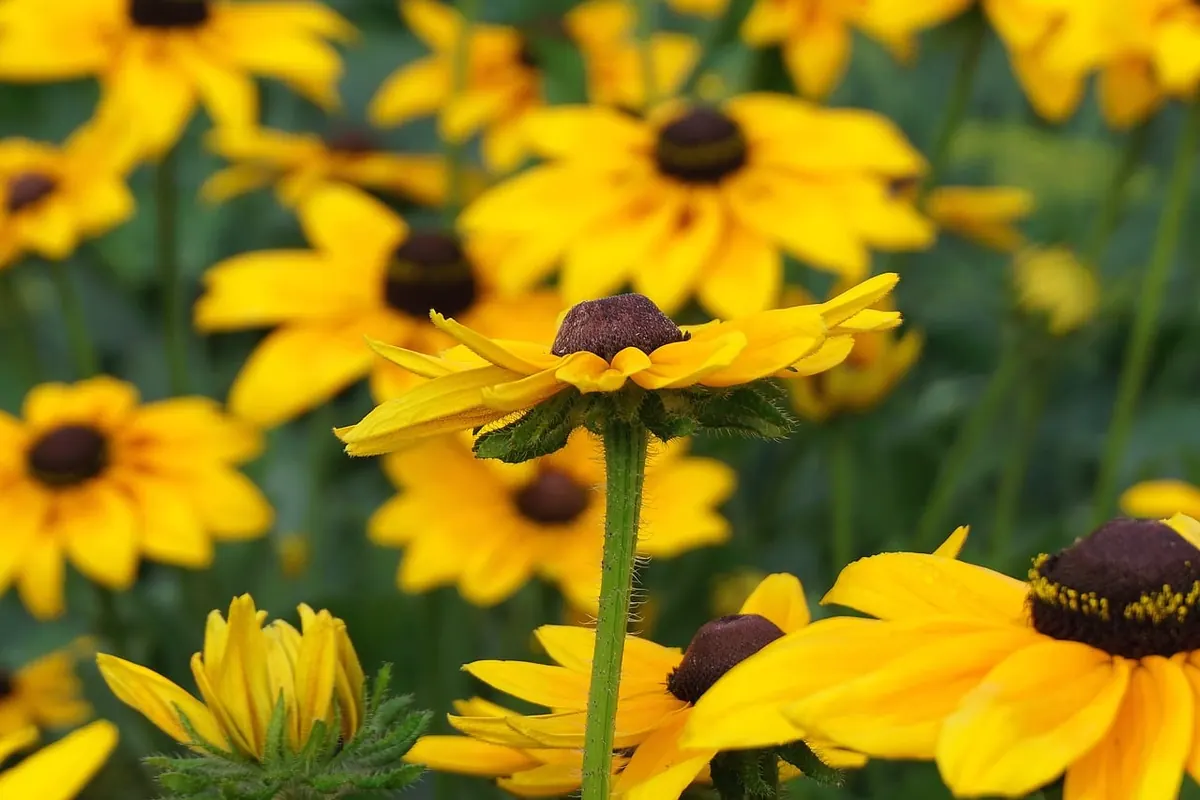
Reliable choices for genuine full sun in a British garden include lavender, rosemary, thyme, sedum, echinacea, rudbeckia, cosmos, salvia, verbena, alliums and most ornamental grasses. Plants often sold in full sun positions that will thank you for a little shelter from the midday heat include hydrangeas, hostas, astilbes, Japanese maples, ferns and foxgloves.
And if you're still unsure, plant one and watch it. A plant stretching upwards with pale leaves and few flowers is asking for more light. One that wilts at midday, scorches at the leaf edges and fades quickly is asking for less. The garden gives you the answer within a season, and you can always move it in autumn.
Photo: Nowaja / Pixabay